Tuesday, April 8, 2014

Through The Eyes Of A Child

Innocence Lost


a photo of a young boy at a demonstration in times square
The World Through The Eyes Of A Child


Think about the world, about the complex problems, the hostility, the animosity, and the hopelessness. Think about how all of these troubles must look when viewed through the eyes of a young child.


Camera
:
 Canon 5D Mark III 
Lens:     Canon 24-105mm f/4L IS USM


Light happens.  Be ready.  Shoot hard.

Copyright © 2014 Daniel R. South
All Rights Reserved

Monday, March 31, 2014

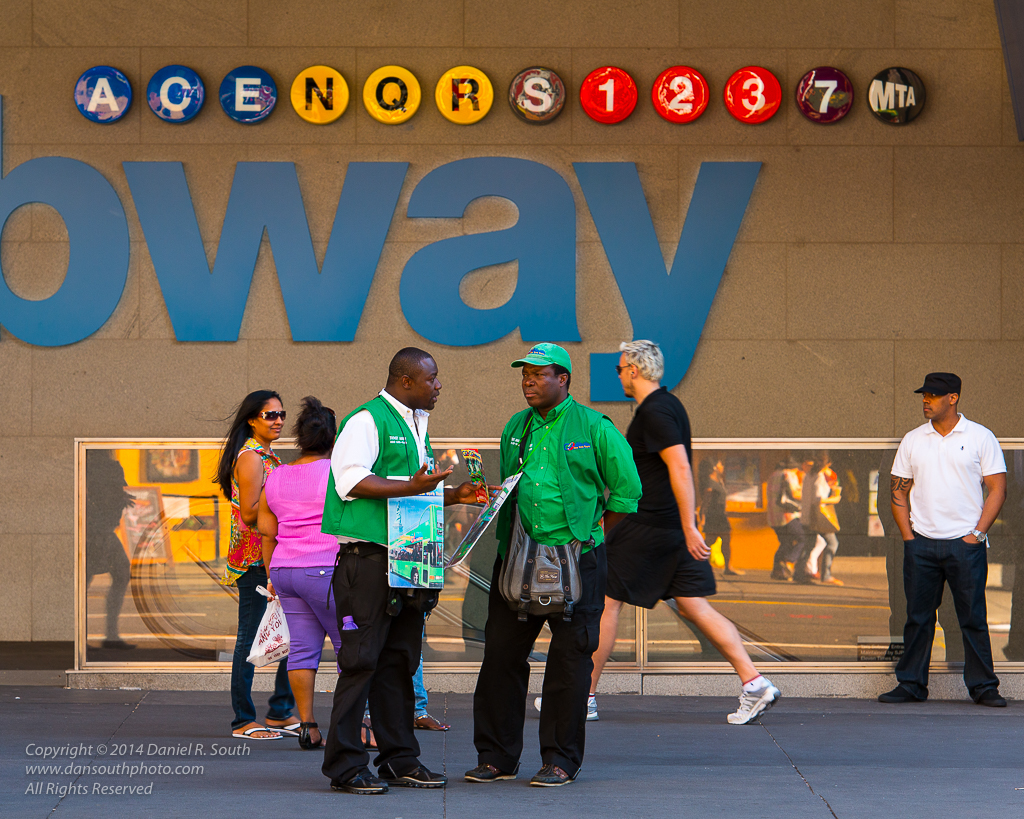
Conversation on 42nd Street

Slice Of Life


a photo of two men having a conversation near the 42nd street subway
Conversation on 42nd Street


Camera
:
 Nikon D800E 
Lens:     Nikon AF-S 70-200mm f/2.8G ED VR II


Light happens.  Be ready.  Shoot hard.

Copyright © 2014 Daniel R. South
All Rights Reserved

Friday, February 28, 2014

Camera Innovation

How Much Does It Really Matter?

I don't write about camera gear on my blogs. I prefer to discuss my photographs and the adventures that I encounter in the act of shooting. 

Plenty of people blog about photography equipment. I don't feel the need to jump on the bandwagon. However, today, I'm ready to make an exception - sort of.


Opinion Piece

The author of a respected photography blog wrote recently about what he perceives to be a lack of innovation by camera manufacturers. The piece was detailed and well written, and I found myself agreeing with most of the author's conclusions. 

However, hours later, it dawned on me that such criticism, though entertaining for the reader, actually matter very little.


Turkeys Beware

Markets are self-correcting. If a manufacturer introduces an ill-conceived product, the public won't buy it. The product's designers and marketers will try to understand why the product wasn't popular. Eventually, they'll offer new products that, hopefully, avoid the pitfalls of the previous models.

Customers can complain. Bloggers can demand changes. But ultimately, sales keep a company in business. When sales tank, manufacturers listen. And they innovate - or at least they make the attempt.


El Dorado 

This is a rich and rewarding age for anyone with an interest in photography. Today's cameras are very powerful, most lenses are very sharp, and there are models to fit just about any budget. If you like to take photographs, you'll find an embarrassment of riches waiting for you at your local camera store.

How much innovation do we require? How much more capable, compact, and economical do cameras need to become? 


a photo of a view camera at hurricane point big sur
The View Camera in Action - Big Sur, Califormia


Newer isn't necessarily better. We've all seen portrayals of photographers from "the olden days" stooping behind large, wooden cameras and viewing their images from under a black cloth. This "view camera" design is still in use today, and they are some of the most powerful cameras in the professional's arsenal. 


Creating Photographs

Innovation is important, but dependence on innovation is foolish. Requests for newer and better tools often betray a lack of motivation and effort. If someone is unable or unwilling to produce photographs until some manufacturer makes it easier for them, I would question their dedication. 

The equipment that's available today features capabilities that exceed what most of us could have imagined a few short years ago. We have enjoyed generation upon generation of advances in lens and sensor design, image quality and dynamic range, autofocus systems and image stabilization. 

In decades past, photographers made sharp, striking images with far less powerful tools than the goodies that you can pick up today at your local electronics shop. Pick up a copy of LIFE or National Geographic from the Sixties or Seventies. The photographs are amazing.

We can spend our time and energy lamenting the absence of exciting innovations - and even that, I question, because a number of outstanding cameras have been introduced in the past few years. - Or we can invest our time and energy creating photographs. 

Which is precisely why I don't like to waste time discussing gear on my photography blogs.


Image captured with: 
Canon EOS 5D Mark II, EF 24-105mm f/4L IS USM

View camera (pictured): Ebony SV45-TE, Gitzo tripod, Really Right Stuff head


Light happens.  Be ready.  Shoot hard.

Copyright © 2014 Daniel R. South
All Rights Reserved

Monday, February 3, 2014

Rating Photographs Constructively

Four Views of Death Valley

It's not easy to rate one's work objectively, but there are advantages to be gained from making the effort. If we want to feature our best photos (for clients, for a website or a photo book, for instance), we need to be able to select the best shots from a larger population. The rating process can also help us to identify our own strengths and weaknesses.

Photo editing and organizing software titles usually provide a "rate by stars" feature.  The number of stars indicates a level of quality.  Typically, a five-star rating is considered the best, but one could flip the ratings system and mark with best work with a single star if they wanted to. (Canon users might like this inverted system, since Canon's best cameras are marked with the number 1.)


a photo of the general store at the rhyolite ghost town in nevada by daniel south
Technically competent but not difficult to reproduce. Rating: **


As for what each level of stars means, there are different options.  But before we discuss applying stars to photos, let's compare for reference the way that a movie critic might use the star system to rate upcoming films.

The Movie Critic's Rating System
* - A really bad film. Don't waste your money.
** - Disappointing. If you must watch it, wait until it comes on TV for free.
*** - A good, solid film, but nothing special.
**** - A very good film with few if any flaws. Highly recommended.
***** - An outstanding film. A contender for Best Picture. A must see.

There are good movies and great movies. There are movies that are somewhat disappointing and others that are laughably bad. The Movie Critic's Rating System has to cover all of these bases.


a photograph of impostor rock on the racetrack playa in death valley by daniel south
Exotic locale. Technically challenging (infinite focus). Rating: ***


But when it comes to our own photos, do we need to mark the bad ones with a star? How about just not rate them at all? Does this rating system make sense for a photographer who is sorting through their work?

Photo Rating System Number 1 (From Bad to Great)
* - A bad photograph. I regret that I took it.
** - A disappointing photo. I could have done better.
*** - A good, solid photo, but nothing special.
**** - A very good photo with few if any flaws.
***** - My best work. I'll show it proudly.

I'm sure that lots of people use this method to good effect, but personally, I find that it doesn't offer enough gradation. Why would I bother to tag a bad photo with a star or a disappointing shot with two stars. It's a waste of stars. Just leave them unrated. Further, if ALL of my good photos get four- or five-star ratings, how would I identify my very best work? I've already run out of stars.


Same locale and technique, but adds a unique sky. Rating: ****


Here is the rating system that I have adopted for my own work. It provides several levels of "good" within the five-star range.

Photo Rating System Number 2 (From Good to Better to Outstanding)
* - Good. A better than average photo. An image that caught my eye upon initial review and shows potential that I might want to explore in the future.
** - Better. A solid image with no perceivable flaws. Work that I would feature proudly on my website. (This is the level where viewers start to say "Wow!")
*** - Exceptional. Beyond technical competence. An image that is emotionally stirring or represents special conditions or circumstances that could not be easily repeated.
**** - Outstanding. Perhaps the best image in an entire collection.
***** - Rare. Among my personal best. The type of image that we don't make many of over the course of a year.

This is the system that works for me. It offers the opportunity to classify my work with varying levels of "good" so I can differentiate the rare gems when they come along instead of wasting stars on mistakes and disappointments.

Mundane or flawed images simply don't get any stars. If an image has even a single star it means that I thought highly of it enough to separate it from the pack. Most of the images that I display publicly are ** or ***, because four- and five-star ratings are reserved for rare and exceptional work. 


a photo of zabriskie point at sunset by daniel south
Technically challenging (exposure). Once in a lifetime sunset. Rating: *****


What are the pros and cons of the rating system that you use? Do you use stars at all, or do you use another rating system (colors, flags, keywords)? How well does your system work for you?


Camera:

        Canon EOS 5D Mark II

Lenses:
        Canon EF 16-35mm f/2.8L II
        Canon TS-E24mm f/3.5L II
        Canon EF 70-200mm f/4L


Light happens.  Be ready.  Shoot hard.

Copyright © 2014 Daniel R. South
All Rights Reserved


Sunday, February 2, 2014

Happy Super Bowl Sunday!

Happy Super Bowl Sunday from New York and New Jersey!


a photo of the empire state building at night with traffic trails new york
New York


a photo of the barnegat light lighthouse on long beach island new jersey by Daniel South
New Jersey


Light happens.  Be ready.  Shoot hard.

Copyright © 2013 Daniel R. South
All Rights Reserved

Exotic Croatia

Jewel of the Adriatic Sea

Exotic Croatia has been one of the most popular galleries on our website. Nevertheless, I decided that it was time to shake things up a bit. :-)

a photograph of a Serbian Catholic Church in Dubrovnik Croatia by Daniel South
Serbian Catholic Church in Dubrovnik

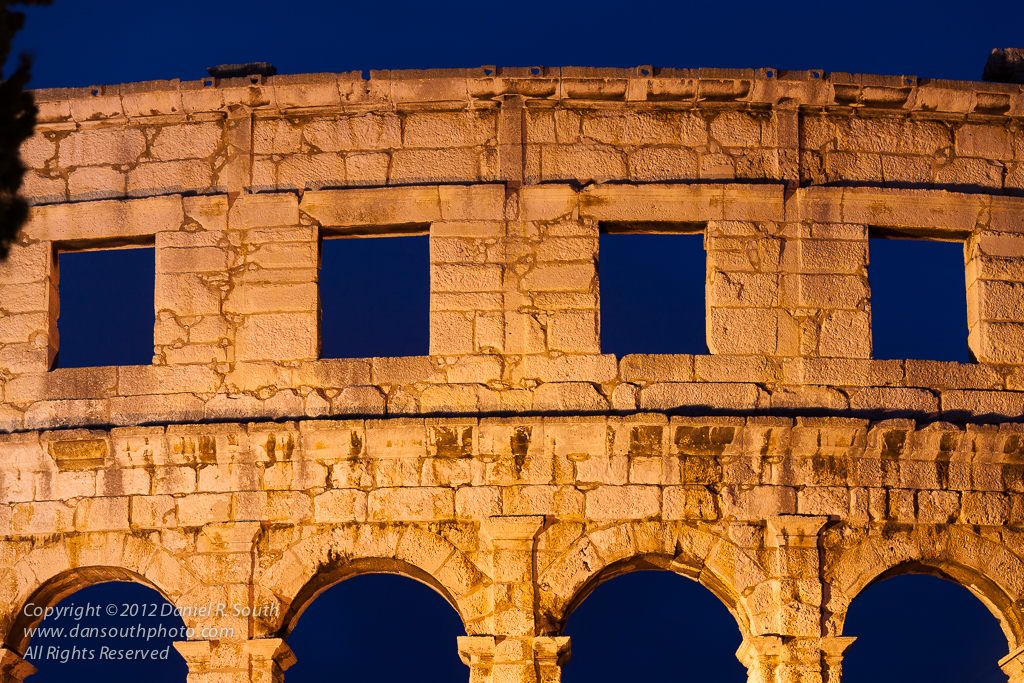
Croatia is a wonderful travel destination featuring amazing sights - Roman ruins, seaside resorts, world-class art museums, and the most amazing walled city that I have ever seen (Dubrovnik)

a photo of a roman amphitheater at pula croatia by daniel south
Roman Amphitheater at Pula

The Croatian people are open and engaging, their food is excellent, and the climate is very similar to that of Italy, their neighbor on the other side of the Adriatic Sea. 

a photo of the croatian flag at sibenik by daniel south
Croatian Flag at Sibenik

In recent weeks, I have fine-tuned every image in the collection for maximum sharpness and impact. I hope that you'll enjoy the updates.

Please click here to view the full gallery.


Light happens.  Be ready.  Shoot hard.

Copyright © 2013 Daniel R. South
All Rights Reserved

Sunday, December 8, 2013

Rudolph Shares His Tips On Originality

Stand Out From The Crowd

Rudolph knows what it means to be unique.

If you'll recall his well-known story, at first he tried to blend in and be like everyone else. That didn't work out so well.

Although he always had a few special friends who believed in him, Rudolph didn't prosper until he embraced his own unique gifts and leveraged them to the fullest. Eventually, he went on to save Christmas and gain acceptance by his peers and his community.


a photo of a lady in a green skirt waiting to cross the street at times square
Waiting To Cross - Times Square


Santa and Rudolph stopped by earlier this week during one of their test flights over New York. I asked Rudolph if he would share his tips on originality. He accepted graciously and added specific recommendations for artists and photographers.


1. Accept that you are unique

No one else sees the world in the way that you do. As long as you stay true to your own vision, your work will trend toward uniqueness.

2. 
Do what you find appealing

Create the images that YOU want to see. Avoid trends and conventions. One day, you'll look back over your portfolio. Will it express what you wanted it to say? Or will it be a clone of what everyone else was doing at the time?

3. Innovate actively

Always look for your own shot, your own interpretation, your own composition. The world is full of photographers who stand behind other photographs in order to "get the same shot". Don't be one of them.

Avoid the herd. Don't take the "postcard shot" that everyone else is taking. Scout aggressively to find your own viewpoint, and make an image that really means something to you.

4. Work every day

Set aside time each day either to go out and take pictures, or to organize and processes images that you've taken in the past. (If you're like me, you probably have a bit of backlog.) Inspiration finds you when you're working, not when you're sitting on the couch.

Christmas comes only once a year, but the people behind the scenes (you know who they are) work every day to make sure that when the day comes, it's really special. If your portfolio means something to you, then you should be working on it constantly, not only when it's convenient.

5. Stay fresh

Mix things up. Vary your approach now and then. If you shoot landscapes, try events or still life. If you shoot portraits, try shooting sports or macro or doing some light painting. Do things differently. Try shooting in light that you would normally avoid.

Some of your experiments will fail. Congratulations! Thomas Edison would be proud of you. Learn what you can, revise your plan, and shoot some more.

6. Be patient

Give yourself time. Don't be too hard on yourself, especially when you're trying something new. Your creative style will emerge at its own pace. If you chase it, it will just move further away. As long as your are working, you are improving. Results will appear, not right away, but soon.


a photo of a photographer shooting with a tripod in times square
Photographer With Tripod - Times Square


I would very much like to thank Rudolph and The Big Guy for stopping by at this most busy time of year. I enjoyed their valuable insights, and I hope that you'll find inspiration in their advice.

Now, if you'll excuse me, I need to dash off to the store to pick up some more milk and cookies, because I appear to have run out.


Light happens.  Be ready.  Shoot hard.

Copyright © 2013 Daniel R. South
All Rights Reserved